
Hello
My name is Carol Burns
President of the Stockton Garden Club, and a busy grandmother of 5
futilely balancing life and all it offers.
Now into my second year as President, I've seen myself grow, finding my 'mo-jo' and accepting the challenges of this year's Centennial Events. We packed in alot of celebrations and while we received tons of media buzz - it was certainly busy. So proud of our members who came through beyond expectations! Our Goodwin Art Gallery Reception & Award night was a great success, as was our inaugural Garden Tour, Blue Star Marker installation at University of Pacific and Jessie's Grove Winery events. While this summer has slowed down and members enjoyed family and traveling, our Club continues to find new ways to reach out into the community to share our love of gardening.
Have you noticed a common thread in conversations these days seems to center around self-care, health and nutritious eating? Since I've been in the garden club these last few years, many individuals I've met expressed their common desire to grow and create their own garden, yet were held back from starting by a lack of confidence and knowledge.
I’ve also noticed that the community at large looks to us for guidance as they realize how a balanced ecology and the critical role of Pollinators play a significant role in our health and well-being. Let's find ways to better share how to have a healthy ecosystem - how to give Pollinators a beautiful place to thrive and teach others they can do the same.
This year, not only do I want to encourage members to find ways to share gardening knowledge, but I want to encourage new gardeners to just 'Take the First Step'. Learn alongside us. The journey is well worth it; the learning is life long and the joys it brings are incalculable.
"The earth has music for those who listen"
~ William Shakespeare

Click on an "Education" page below to help you get started
What can I do?

Many pollinating insects are declining in California, including bees and butterflies. In fact the population of western monarch butterflies has declined 95% since the 1980's, due to a variety of reasons,
including habitat loss and degradation, pesticides, and climate change.

Increase Habitat
& Encourage Others
One important step we can take to protect these important animals is to increase the amount of habitat available to these species. Developments, paved roads, lawns, concrete parking lots and road divider strips have eliminated habitats used for shelter and food sources.
A varied habitat offers year round food such as seeds, nectar, berries, and places to drink, hide and build nests.
This includes planting host plants near nectar-rich flowers for caterpillars to complete their life cycle as a butterfly.
If you provide habitat and ask your neighbor to put aside a small patch in her yard, then another neighbor to do the same - you've just created a "Pollinator Corridor" or pathway for pollinators to stay within their flying area and receive proper sustenance!
For extraordinary statistics on how much of nature humans have removed for developments, read Doug Tallamy's book Bringing Nature Home

Don't Use Pesticides
Don't like spider webs or bugs? Hiring a pest control company to rid your yard of them also destroys the good bugs that feed on the bad bugs. The spiders and caterpillars are food for birds. Not using pesticides may be inconvenient but you are helping the natural ecosystem.
For example if you spray to kill spiders, the spray will likely kill lacewings, which are voracious eaters of aphids on your roses and other plants. Lacewings also contribute by pollinating plants as they feed on nectar and pollen. They are a natural form of pest control.
Visit www.xercessociety.org for 7 reasons to stop pesticide use at home.

Plant Pollinator Flowers close together for each Season
Pollinators need nectar for energy & nutritional support and pollen for protein and nutrients for feeding their young in every season, not just spring or summer. Choose plants that bloom in every season; leave seed heads on in winter for food and don't blow your leaves off your beds - they provide shelter for insects and ground nesting bees throughout the winter. Grouping flowers allows pollinators to visit multiple blossoms in one area, more energy efficient and ensures visibility for pollinators flying overhead.
It is recommended to plant a
3 ft x 3 ft area
Your yard will flourish with bees, birds and humming insects if you plant a diversity of plants throughout the Seasons.
PLANTS POLLINATORS LOVE

The goal for a Pollinator Corridor or Pathway is to close the gaps between food sources;
Grow Plants for each season; &
Plant them close enough together for them to eat their fill without flying far!
Recommended planting groups of 5 or more of each species
The Pollinator plants listed below are tried and true!
Don't Stress, just try a few!
Remember Butterflies like a flower with a "landing field"
Hummingbirds poke their long forked tongues into tubular flowers to lap up nectar
and Bees ... well, Bees are easy to please!

spring
Wild Strawberry (Fragaria Virginiana (Early Spring)
Phlox
Catmint (Nepeta)
Salvia
Red Columbine
California Poppy
California Lilac (Ceanothus - Ray Hartman is a good one)
California Buckwheat
Yarrow
Sage
Lupine
Foothill Penstemon
Manzanita
Baby Blue Eyes (like a sunflower)
Clarkia
Citrus Trees (April)
Monkey Flowers (May)
Phacelia (May)
and of course: Lavender

summer
Early: California Poppy
& Lupine
Sunflowers
Buckwheat
California Fuchsia
Narrrowleaf Milkweek
Yarrow still blooming
Sage
Coyote Mint
Sunflowers
Hollyhocks
Beardtonque (tubular!)
Globemallow
Black Sage
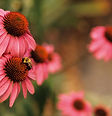
Coneflower (Echinacea)
Lavender
Blanket Flowers
Catmint (early summer)
Russian Sage
Germander Sage (Salvia Chamaedryoides)
Brittlebush
Globe Mallow
Rosemary
Oregano
Any bolted veggies or herbs
fall
Goldenrod (Solidago)
Yarrow still blooms
Asters
Cosmos
Salvias
California Fuchsia (still!)
Toyon (large)
California Poppy (can be encouraged to bloom into fall!)
Sunflowers
Western Redbud
Agastache
Borage
Coneflowers
Marigolds
Blanket Flowers
Russian Sage (still!)
Germander Sage (still)

winter
California Fuchsia
Toyon
Buckwheat
Black Sage
Cleveland Sage
Flowering Quice
Camellias
California Coffeeberry
Manzanita
Astors
Yarrow (seed heads)
Borage
Rosemary
Lavender
Ceanothus (some varieties)
Chaparral Currant
Coreopsis (November)
Contact
I'm always eager to answer any questions or share more about our Club. Let's connect,
Carol